Industrial Floor Coatings In Fraser, MI
Industrial floors in Fraser, MI have to handle more than ordinary foot traffic. Forklifts, rolling equipment, dropped tools, pallet movement, moisture, chemical exposure, and repeated cleaning can all wear down bare concrete. Diamond Coatings Epoxy and Concrete Coatings provides industrial floor coating solutions for facilities that need a more durable, easier-to-manage working surface.
Based in Shelby Township, MI, Diamond Coatings Epoxy and Concrete Coatings serves commercial and industrial customers in Fraser and across the surrounding Michigan region. The right coating system can protect concrete, improve day-to-day housekeeping, and help define a workspace that supports safer, more organized operations. The best choice depends on what happens on the floor, not just the color a facility manager prefers.
What an industrial coating system can solve
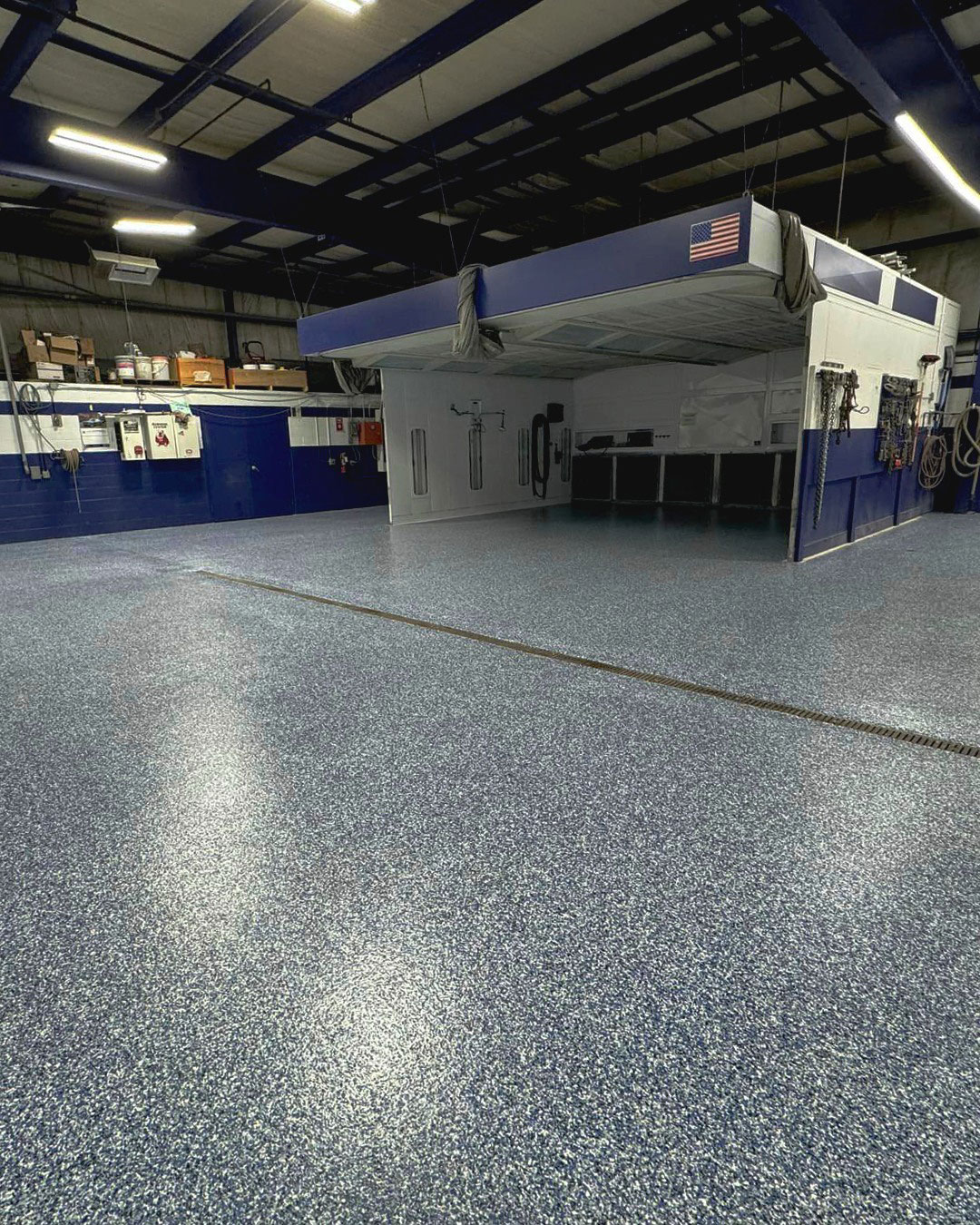
Industrial Floor Coatings are protective systems installed over prepared concrete to create a resilient, continuous surface for demanding environments. They are often considered when concrete is dusty, stained, cracked, difficult to clean, or showing wear in traffic lanes and work areas. A well-matched system addresses the causes of floor deterioration while giving the facility a practical finish for its operations.
For facilities comparing Industrial Floor Coatings and industrial epoxy flooring, the main goal is usually long-term surface performance rather than a cosmetic upgrade alone. Epoxy-based systems can provide a smooth, durable finish over concrete, while other coating types may be considered for particular exposure conditions or performance needs. Diamond Coatings Epoxy and Concrete Coatings offers commercial and industrial flooring services that include 100% solid epoxy and urethane coatings.
- Concrete protection: A coating creates a protective layer that helps shield the slab from routine abrasion, stains, and surface wear.
- Cleaner operations: A seamless or low-joint surface is generally easier to sweep, mop, and maintain than deteriorated bare concrete.
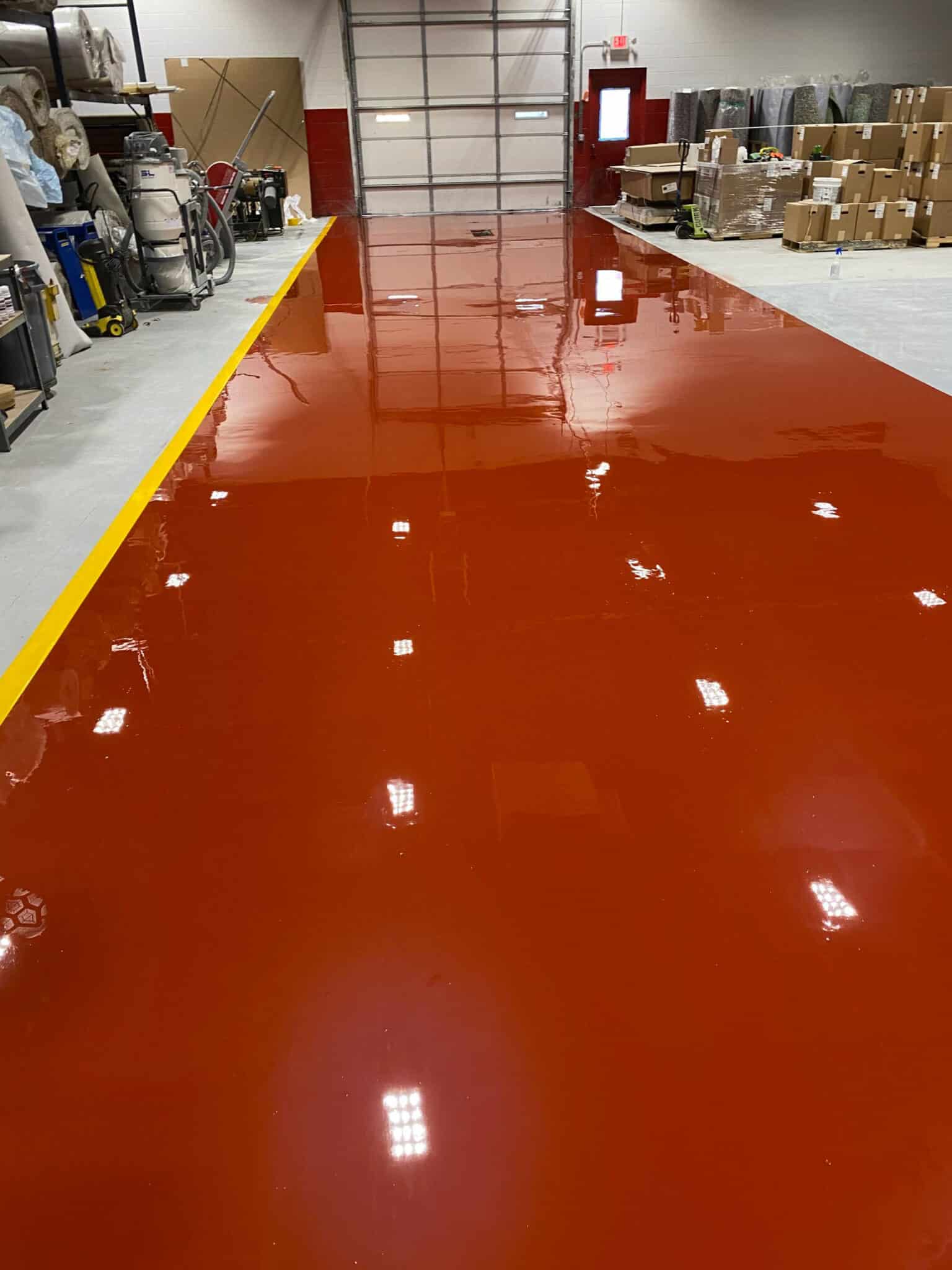
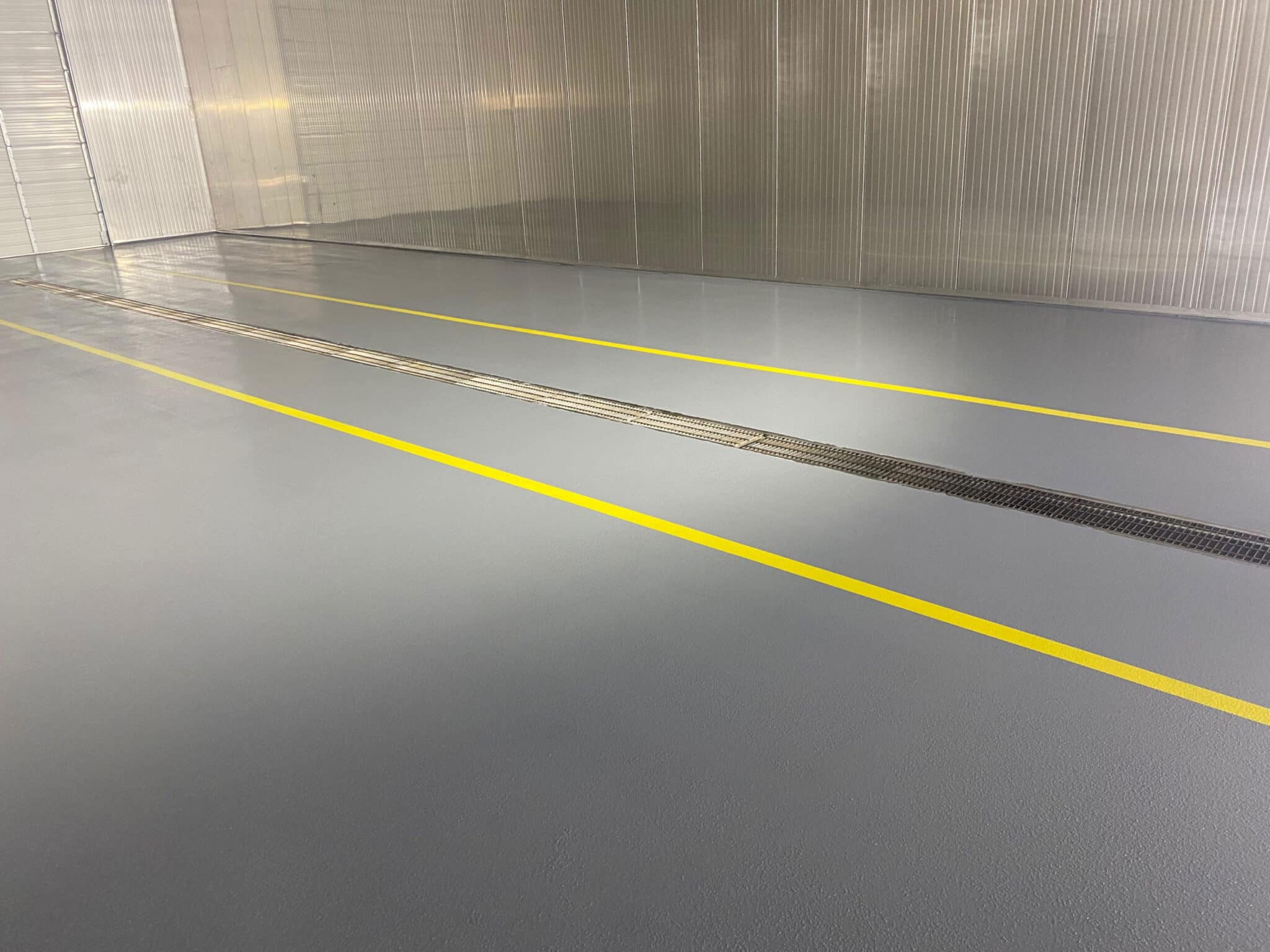
- Work-zone definition: Color, striping, and logos can help distinguish aisles, traffic paths, staging areas, and designated work spaces.
- Facility appearance: A finished floor can make a warehouse, automotive area, production space, or commercial work area look more orderly and intentional.
Match the system to traffic, exposure, and use
The coating selection should reflect the facility’s actual conditions. Heavy rolling loads, hot tires, chemical contact, frequent washing, sunlight, impact, and temperature changes place different demands on a concrete floor. Discussing those conditions before installation helps identify whether a solid epoxy, urethane coating, quartz system, polished concrete, or another approach is the more appropriate fit.
Not every worn concrete floor needs the same solution. Polished concrete may suit some interiors seeking a mechanically refined, lower-maintenance concrete finish, while decorative stain can change appearance without providing the same protective build as a resinous coating. Industrial epoxy and urethane systems are generally selected when a facility needs a protective, cleanable surface with performance characteristics tailored to its use.
Preparation determines how the floor performs
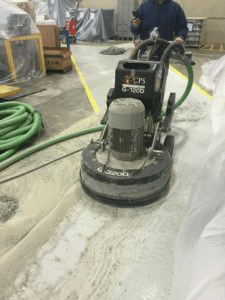
Surface preparation is a central part of a successful concrete coating project. Coating material needs a clean, sound concrete surface to bond as intended, so existing contaminants, loose material, failed coatings, glue, and unsuitable residues need attention before installation. Applying a new finish over unresolved substrate problems can lead to premature issues that a topcoat alone cannot correct.
- Evaluate the slab: Review current wear, cracks, prior coatings, stains, moisture-related concerns, and the intended use of the area.
- Plan repairs and removal: Address cracks as appropriate and remove tile, glue, damaged coatings, or other materials that interfere with the new system.
- Prepare the concrete: Create a clean, properly profiled surface so the selected coating has an appropriate foundation.
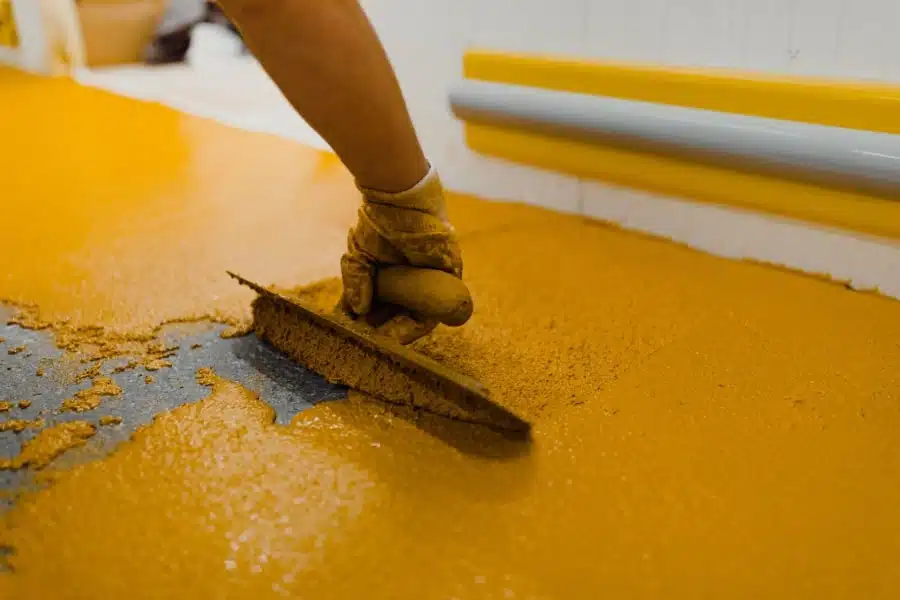
- Install the specified system: Apply the chosen primer, body coat, broadcast material, topcoat, striping, or other components in the planned sequence.
- Allow for cure and return to use: Coordinate access and operations around the coating’s required curing time before traffic resumes.
Diamond Coatings Epoxy and Concrete Coatings also lists crack repair, tile and glue removal, general floor maintenance, decorative concrete stain, and polished concrete among its available services. That broader scope matters because the visible finish is only one part of the project. A facility benefits when the conversation includes the condition of the existing slab and the preparation needed before a new industrial surface is installed.
Plan the project around operational realities
Before requesting an estimate, it helps to identify the square footage, building use, traffic pattern, equipment movement, desired shutdown window, and any problem areas. A warehouse may prioritize abrasion resistance and aisle markings, while an automotive work area may focus on cleanability and resistance to common shop contaminants. Schools, offices, industrial facilities, and commercial spaces can have different practical priorities even when each begins with a concrete slab.
Facility managers should also consider access while the floor is being prepared and coated. Some work areas may need to be cleared, staged in phases, or temporarily kept out of service so preparation and curing can proceed without interruption. Clear planning is especially valuable when a floor supports shipping, receiving, production, service bays, or other functions that cannot be casually relocated.
Build a functional floor, not a one-size-fits-all finish
An industrial floor can be designed for more than a single shade of gray. Color selection, texture, visual boundaries, and decorative options can all support the way a facility works. The useful question is how each finish element will contribute to visibility, maintenance, traffic flow, and the overall look of the space.
Color and aggregate choices can support daily operations
Choosing base colors is a practical decision as well as an aesthetic one. Lighter tones can make debris and spills more visible, while darker tones may better mask some everyday marks in high-activity areas. The selected color should also work with lighting conditions, wall finishes, safety markings, and the level of routine maintenance the facility expects.
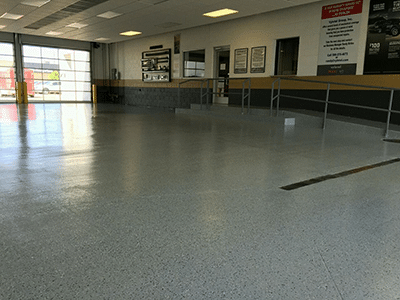
For areas that need additional visual texture or a more customized appearance, decorative chips can be incorporated into an appropriate coating design. Chip blends can add dimension and help break up the uniform appearance of a plain coating, making them useful in showrooms, offices, customer-facing commercial areas, and select work spaces. Their suitability should be considered alongside cleaning requirements and the intended texture of the finished surface.
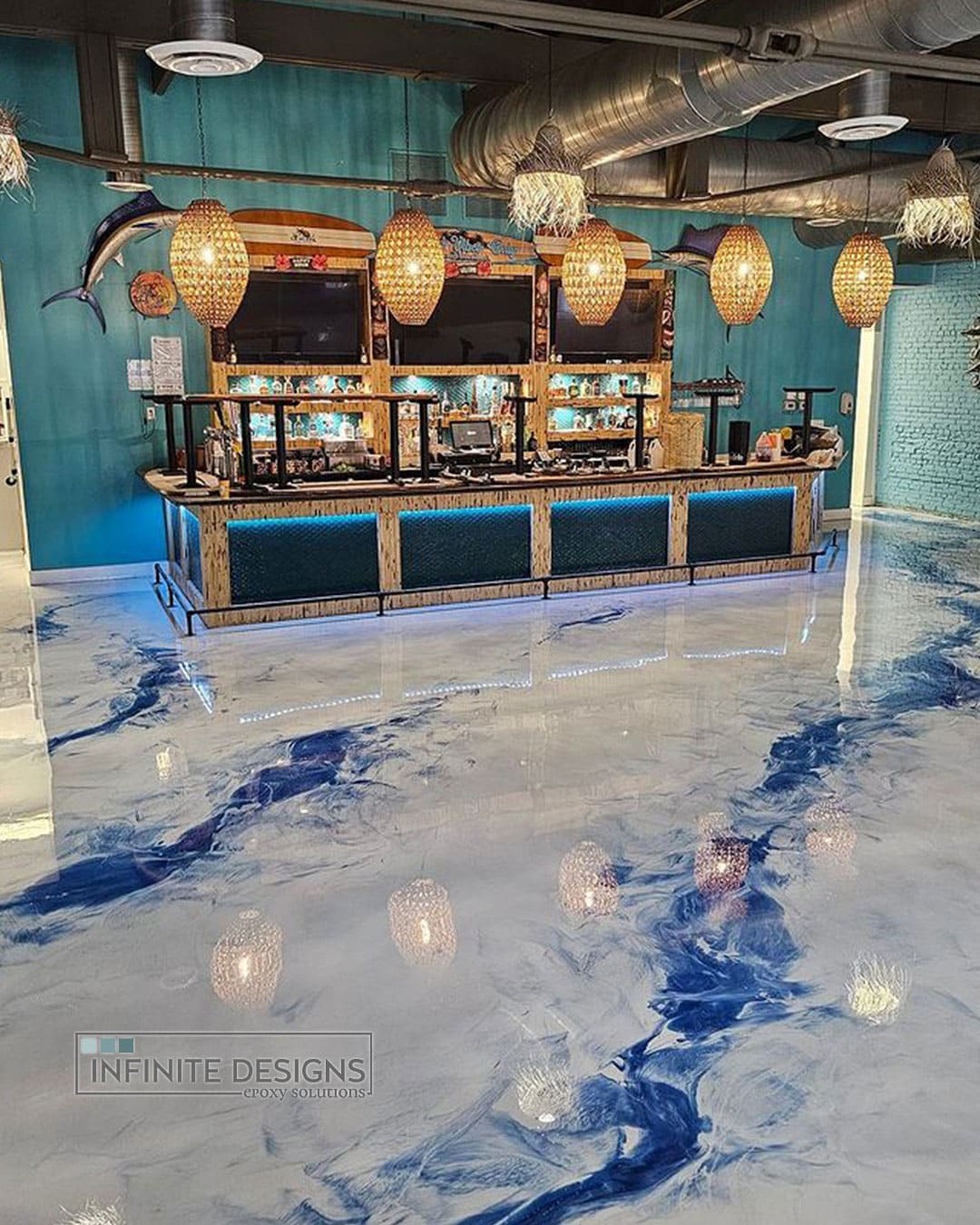
Some projects call for a more distinctive visual effect, and metallic additives provide a way to create movement and depth in a resinous floor finish. This option is generally more appearance-driven than a standard industrial coating system, so it may fit lobbies, display areas, offices, or specialty commercial interiors better than a heavily used loading zone. The final decision should balance visual goals with the space’s traffic, cleaning, and durability demands.
Striping, logos, and texture should have a purpose
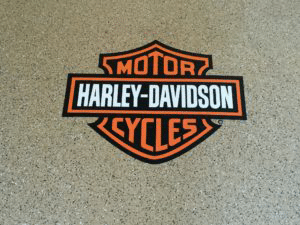
Aisle traffic striping and floor logos can turn a coated floor into a clearer operational tool. Marked walkways, equipment routes, storage zones, and work cells can help communicate where activity belongs. When visual features are planned with the coating project rather than added as an afterthought, the facility can better align appearance with workflow.
Texture also deserves a deliberate conversation. A smoother floor may simplify cleaning, while added texture can be desirable where extra traction is a concern. There is a tradeoff, because more texture may hold dirt more readily and require different cleaning practices, so the surface profile should match the site’s real environment and maintenance plan.
Why Fraser facility owners consider Diamond Coatings
Diamond Coatings Epoxy and Concrete Coatings is a Macomb-based, owner-operated business specializing in epoxy floor coating and concrete floor polishing for commercial, industrial, and residential clients. For a Fraser, MI property manager or business owner, that means the same company can discuss protective coatings, concrete preparation needs, floor maintenance, decorative options, and polished concrete when evaluating the space. The company is located in Shelby Township, Michigan, rather than claiming an office in Fraser.
Reviewing completed projects can make it easier to picture how coating styles, color choices, striping, and finished surfaces may look in a real setting. The our work gallery provides a useful starting point for comparing visual approaches across epoxy and concrete coating projects. Project photos are most helpful when paired with a discussion about your own floor’s usage, substrate condition, and operating requirements.
Past customer feedback can also be one part of a careful provider-selection process. Reading client reviews may help a prospective customer understand the experiences others chose to share about working with the company. It is still wise to ask directly about the scope of your project, preparation needs, coating options, scheduling considerations, and the expected path from evaluation through completion.
Questions Fraser businesses commonly consider
What are Industrial Floor Coatings used for?
Industrial Floor Coatings protect prepared concrete in facilities such as warehouses, automotive areas, industrial buildings, schools, offices, and commercial work spaces. They can improve cleanability, reduce concrete dusting, enhance appearance, and support organized traffic patterns. The right system depends on traffic, exposure, substrate condition, and maintenance expectations.
Can a coating be installed over cracked or previously covered concrete?
Cracks, old coatings, tile, glue, and surface contamination should be evaluated before a new coating is selected. Some conditions may require crack repair or removal work so the new system has a sound surface to bond to. An estimate discussion is the appropriate time to identify visible concerns and determine the preparation scope.
How do epoxy and urethane coatings differ?
Epoxy is commonly used to build a durable, high-performance floor over concrete. Urethane coatings can be considered for projects requiring different performance characteristics, including certain exposure conditions. A professional recommendation should be based on the environment, equipment traffic, cleaning practices, and the finish the facility needs.
Does Diamond Coatings Epoxy and Concrete Coatings have a Fraser office?
Diamond Coatings Epoxy and Concrete Coatings is located in Shelby Township, MI and provides industrial floor coating services in Fraser, MI. Contacting the company allows a Fraser facility to discuss its floor conditions, project goals, and whether the available commercial and industrial services fit the planned work.
Arrange an industrial flooring estimate
If bare concrete is creating cleaning problems, showing heavy wear, or no longer supporting the way your facility operates, a project conversation can clarify the options. Share the type of space, the current floor condition, expected traffic, and any visual or safety-planning needs. Diamond Coatings Epoxy and Concrete Coatings in Shelby Township, Michigan can help Fraser customers begin evaluating a practical coating solution.
Request an appointment for an industrial floor coating estimate and discuss your Fraser, MI facility’s needs with Diamond Coatings Epoxy and Concrete Coatings. A focused evaluation is the best next step toward selecting a durable floor system that fits the concrete, the work performed on it, and the way the space needs to function.